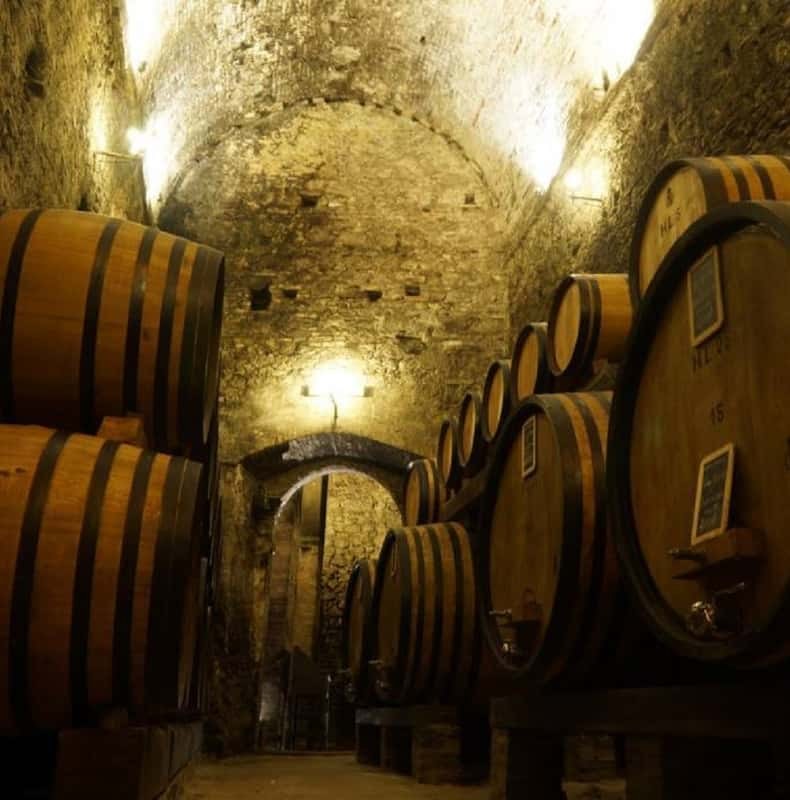
Montepulciano: Wine Tasting and Cellar Tour
An hour under the old town with a guide, five DOC and DOCG wines of Montepulciano, and pecorino of different ages with bruschetta and crostini on the side.
From $37 per person
Check AvailabilityThe wine is why the cellars are here, why the coaches come and why an hour underground costs what it does. Vino Nobile di Montepulciano is Sangiovese, it is grown inside one comune, and it has been a DOCG since 1980. Read this before you book Montepulciano guided tours, and you will know what you are being poured.
Two red wines carry this town's name, and they come off the same hillsides. The one you have heard of is aged for years before it is sold. The other is drunk young, and it is the glass on the table at lunch.
| The rule | Vino Nobile di Montepulciano | Rosso di Montepulciano |
|---|---|---|
| Grape | Sangiovese, called Prugnolo Gentile here, minimum 70 per cent | The same grape, the same minimum 70 per cent |
| Ageing | Two years minimum, at least one of them in wood | About a year |
| Riserva | Three years minimum | No Riserva tier |
| Appellation | DOC by decree of 12 July 1966, DOCG by decree of 1 July 1980 | Its own DOC, from the same vineyards |
| Where it is grown | Entirely inside the comune of Montepulciano, Province of Siena | The same ground |
| What it is for | The bottle you carry home | What people here drink at lunch |
Those ageing minimums are the reason a flight here tastes the way it does. You are usually poured the young wine first, then a Vino Nobile, then a Riserva if the cellar has one open. Ask what year you are drinking, because the extra time in wood shows most on an older bottle.
Prugnolo Gentile is the local name for Sangiovese, and it is the grape in your glass. It is not a separate variety, and nobody here will correct you if you call it Sangiovese — but the label will say Prugnolo Gentile, and now you know why.
You will notice that almost nothing here looks like a winery. The palaces on the Corso have plain wooden doors cut into their bases, and behind them the ground drops away into brick vaults that run under the street. That is where the wine sits, at a steady cool temperature, a few metres below people eating lunch.
The town is built on a ridge of soft stone, which is easy to dig and holds its shape, so cellar after cellar was cut downward instead of outward. Some of them go further back than the wine does: one of the coach days from Rome takes in a working cellar from the 1200s and a 2,000-year-old Etruscan tomb in the same visit, because on this hill the two are in the same hole in the ground.
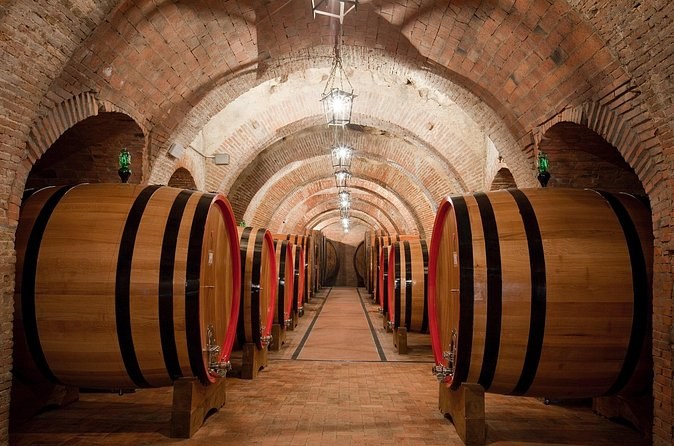
This matters to your day in a practical way. A cellar hour is mostly stairs and it is cool in any month, so take something with sleeves even in August. It is also why rain costs you almost nothing here: the thing you came to do is underground.
All three are Sangiovese. What separates them is how long the wine must age and how much ground the name covers, and that second one is the difference people miss.
| Wine | Grape | Minimum ageing | Where it is grown |
|---|---|---|---|
| Vino Nobile di Montepulciano | Sangiovese, at least 70 per cent | Two years, three for Riserva | One comune, this one |
| Brunello di Montalcino | Sangiovese | Longer than Vino Nobile | The comune of Montalcino, the next ridge west |
| Chianti | Sangiovese | Shorter than Vino Nobile | A far larger stretch of central Tuscany |
| Montepulciano d'Abruzzo | The Montepulciano grape, a different variety | Set by its own rules | Abruzzo, hundreds of kilometres east |
Montalcino is the next ridge west of here, close enough that several of the coach days pour both wines on the same afternoon. If you want to settle the argument yourself, book one of those rather than two separate tastings — you will taste them an hour apart, which is the only fair way to compare.
Every tasting here is an operator's own price for opening a cellar and pouring, and what lands in front of you varies more than the fares do. These are the menus the listings themselves publish:
The vineyards start immediately below the walls and run out across the Valdichiana on one side and toward the Val d'Orcia on the other. You can see them from the terrace at the top of the town, and you can be standing in them in fifteen minutes.
Walking is not the way to do it: the rows are spread over several kilometres of hill, and the roads between them are white gravel with no footway. An e-bike, a horse or a vehicle is what gets you there, and the rides out among the vines run from $93 to $303 per person. If you would rather stay in town, the cellar doors on the Corso are all within ten minutes' walk of Piazza Grande.
A cellar hour starts inside the walls and runs about an hour. A ride out into the vineyards takes most of a day and ends back at the same door.
Every cellar on the Corso sells what it pours, and most will pack a bottle for a suitcase. Shipping is a different matter: it is arranged cellar by cellar, the cost depends on where you live, and no tour fare here includes it. Ask at the counter at the end of your tasting, when somebody has time for you.
If you are flying home, buy at the end of your stay rather than the start, and check your airline's limit before you commit to a case. A bottle of Rosso costs a fraction of a Riserva and travels just as well.
The grape, the minimum percentage, the ageing rules and both decrees are the appellation's own, checked 20 September 2026, and set out in full on our disclosure page. Every tasting menu above is quoted from the listing that sells it. We do not print the claim that this was Italy's first DOCG, because no official page we could reach states it; the decree dates are stronger anyway.
An hour under the old town with a guide, five DOC and DOCG wines of Montepulciano, and pecorino of different ages with bruschetta and crostini on the side.
From $37 per person
Check Availability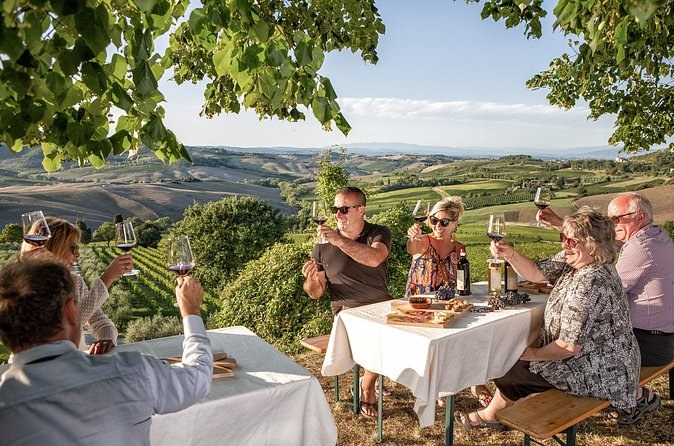
A winery a kilometre below the walls, an hour and a half, and Vino Nobile di Montepulciano poured at the place that makes it. The cheapest way to drink the appellation properly.
From $35 per person
Check Availability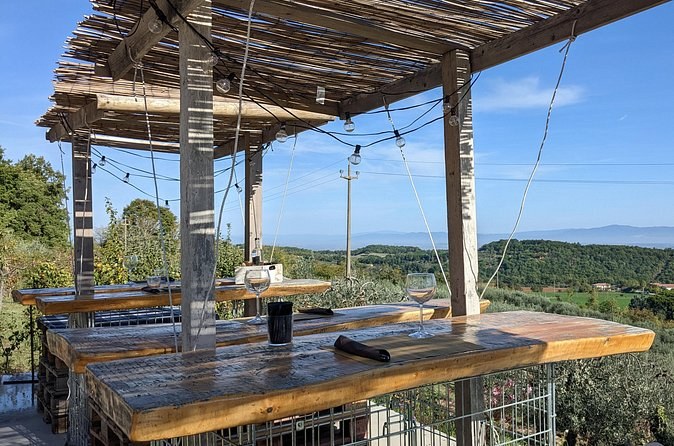
Two private hours at a small grower down at Sant'Albino, below the hill. Local wines, your party only, and no coach anywhere near it.
From $58 per person
Check AvailabilityNext: see what else is on the hill in things to do, pick a month on when to visit, or compare every tour on Montepulciano Tours.