What to Eat in Montepulciano
This guide is about the food on the hill: the pasta you roll, the pig on the board and the cheese from the next ridge. It tells you what each cooking class cooks, what a farm lunch looks like, and how to ask about allergies before you book. Read it before you pay for a Montepulciano guided tours that ends at a table.
What is pici, and why is it rolled, not cut?
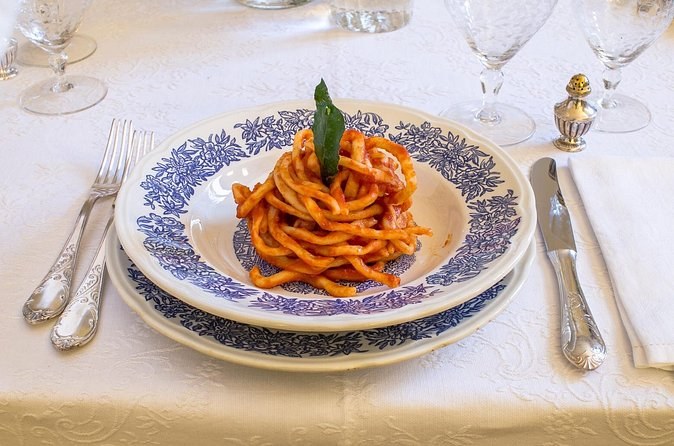
Pici is the thick hand-rolled pasta of this corner of Tuscany. It is made from flour and water and rolled between the palms into long, uneven strands. It is not cut from a sheet, which is why no two strands match.
Here it comes with aglione, a garlic sauce, or with a ragù of Cinta Senese.
You can learn to make it. The farmhouse class outside town teaches pici alongside pappardelle, and the Civita coach day from Rome shows a pici demonstration at lunch. One of the Rome days serves pici with meat sauce, in a vegetarian version if you ask.
What is Cinta Senese?
A Tuscan pig breed with a white belt round its shoulders and forelegs. The Cinta Senese is raised outdoors, under trees, and it is what the cured meat on your board is made from.
Two farm visits here are built round it, both on Via Madonna della Querce, by the church. Farmer Roberto raises his pigs in a semi-wild state, on feed and cereals grown in the Tuscan countryside. You meet them in the mud, and a tame one called Ciro comes to say hello.
Then you eat what the farm makes: cured meats, cheese and bread. That is the whole idea: you meet the animal before you taste it.
What is pecorino, and where does it come from?
Sheep's milk cheese, and the best known here comes from Pienza, the next hill town, 8.4 km from Piazza Grande in a straight line. Pecorino di Pienza turns up on many of the boards you will be served.
It comes young and soft or aged and hard. The cellar hour under the old town pours its wine with pecorino of several ages. The farm visit serves three cheeses, fresh, semi-seasoned and a Morchiato Riserva, with compotes. The farm tour with lunch serves Pecorino di Pienza with homemade jam.
The Val d'Orcia coach day from Florence includes a pecorino tasting in Pienza itself, if you want it at the source.
What do the cooking classes cook?
Pasta, above all, and a dessert. Here is what each one lists:
- The farmhouse class at Le Caggiole: chef Giacomo teaches fresh pappardelle and pici with traditional sauces, starters and tiramisu from scratch. Four hours, eight cooks at most, Tuscan wine with the meal.
- The class in the centre: fresh pastas, sauces and a Tuscan dish, with a dessert, cooked with a local chef from seasonal ingredients. Four hours, with white or sparkling wine at the table.
- The home pasta class: two kinds of homemade pasta and a tiramisu, in a local cook's home. Three hours, with prosecco and nibbles to start and wine with the meal.
- The show-cooking meal: a local host cooks three courses in front of you, for lunch or dinner, served with wine and espresso. Two and a half hours, and you watch rather than cook.
All of them end with you eating what was made. Every one is on the Montepulciano food tours page.
Should you take a class in a home or in a kitchen?
Pick by what you want from the afternoon. A home class is sociable: you cook at a family's table with a handful of strangers, and the address reaches you only after you book. It feels like being a guest.
A kitchen class is technical. The farmhouse class runs in Le Caggiole's own cooking school out in the hills, and puts a lot of weight on technique. The class in the centre meets at a trattoria near the Colonna del Marzocco, so you can walk to it.
If you have no car, the class in the centre is the simple choice. The farmhouse class offers no transfer, and the home addresses can be a taxi ride from the walls.
What are the farm lunches like?
Simple and short. The farm visit takes ninety minutes, for your party alone. After a walk through the vines and the olive grove and a meeting with the pigs, you sit down to a tasting platter of Cinta Senese cured meats or a quick lunch from the farm's own produce. Nothing is poured.
The farm tour with lunch takes two hours in a group of up to ten. It serves Cinta Senese cold cuts, bruschetta or panzanella, and Pecorino di Pienza with jam, with a local wine tasting.
Neither is a long Tuscan lunch. Think of a generous plate rather than three courses.
Can the kitchens handle allergies and diets?
Only if you tell them first. The operators are clear about it in their own terms:
- The farmhouse class: tell them about any intolerance or allergy before you book. After booking, they take no changes to the menu.
- The class in the centre: not suitable for gluten intolerance or severe food allergies. Other dietary needs must be sent in advance.
- The farm tour with lunch: send any dietary restriction in advance.
Vegetarians do well on the pasta classes. The farm visits are built round cured pork, so a vegetarian should pick a class instead.
What does a wine tasting feed you?
A snack, not a meal. The cellar hour under the old town serves pecorino, bruschetta and crostini. The cellar on Via Ricci serves bruschetta with new olive oil. The grower on Via dei Canneti serves taralli, crackers and bruschetta. The resort on Via Umbria serves a board of cold cuts, the most filling of them.
So eat lunch before an afternoon tasting. Our wine tasting guide lists every tasting with its food side by side.
What do the coach days feed you?
Most include lunch, and each is different:
- The Rome day with lunch: three courses at a Tuscan farm and winery.
- The twelve-hour Rome day: local charcuterie and cheese, then pici with meat sauce, in a friars' old refectory.
- The Civita day: a traditional Tuscan lunch at a winery, with a pici demonstration.
- The Siena day: a full Tuscan lunch with wine pairing.
- The Florence days: no lunch; the Val d'Orcia day includes Pienza pecorino.
What do you drink with it?
Wine from the next field, mostly. Rosso di Montepulciano is the younger wine from the same vineyards as the Vino Nobile, aged about a year, and it is what people here drink at lunch. Vino Nobile itself, aged at least two years, goes with the heavier dishes: a ragù, or a board of Cinta Senese.
Each food tour pours its own:
- The home pasta class opens with prosecco and nibbles, then wine with the meal.
- The class in the centre pours soft drinks, water and white or sparkling wine with the meal. Other drinks are extra.
- The farmhouse class and the show-cooking meal serve wine with what is cooked, and the show-cooking meal ends on espresso.
- The farm tour with lunch includes a local wine tasting. The private farm visit pours nothing, so bring water for the walk.
If you have a sweet tooth, the grower on Via dei Canneti pours a Muffato, a sweet wine, at the end of its tasting. For the rest of the wine on the hill, read the wine tasting guide.
Can children come to the table?
Yes, more easily than to a cellar. The farm visits are the best fit: children meet the pigs, and families bring grandchildren along. The farm visit lists infant seats and wheelchair access.
The home classes take children too, and families cook together there. The tastings do not pour for anyone under 18.
The classes and farms, side by side
Here is every food tour on the hill, from each listing's own figures.
| Tour | How long | What you eat | Where | Group up to | From |
|---|---|---|---|---|---|
| The farmhouse class | 4 hours | Pici, pappardelle, sauces, starters, tiramisu | Le Caggiole, outside town | 8 | $206 |
| The class in the centre | 4 hours | Fresh pasta, sauces, a dessert | Opposite Palazzo Avignonesi | Not stated | $91 |
| The home pasta class | 3 hours | Two pasta shapes and tiramisu | A local home | 15 | $76 |
| The show-cooking meal | 2 hours 30 min | Three courses, cooked for you | A local home | 10 | $128 |
| The farm visit | 1 hour 30 min | Cured meat, three cheeses | Via Madonna della Querce | Your party | $52 |
| The farm tour with lunch | 2 hours | Cold cuts, Pecorino di Pienza, wine | Via Madonna della Querce | 10 | $67 |
If you want to cook, take a class. If you want to meet the animal on your plate, take the farm. With a day to spare, do both.
Frequently asked questions
What is pici?
What is Cinta Senese?
Can vegetarians eat well on these tours?
Do I get the recipes?
Can children do a cooking class?
What is there for someone who is not drinking?
Tables that fit this guide
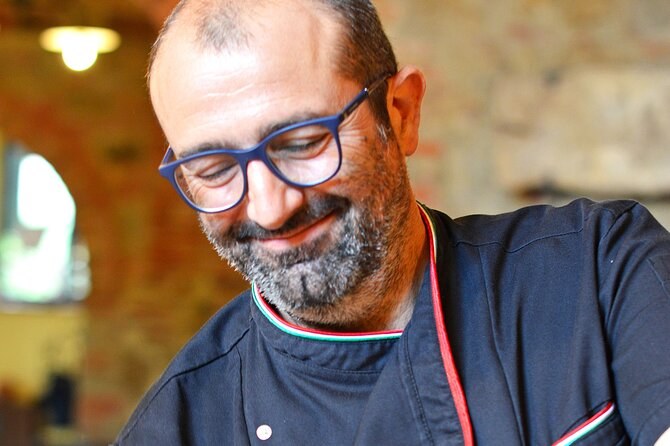
Tuscan Cooking Class -Traditional Pasta Menu
Four hours at the Le Caggiole farmhouse kitchen with chef Giacomo, eight cooks at most: pici, pappardelle, sauces and tiramisu, eaten with Tuscan wine.
From $206 per person
Check Availability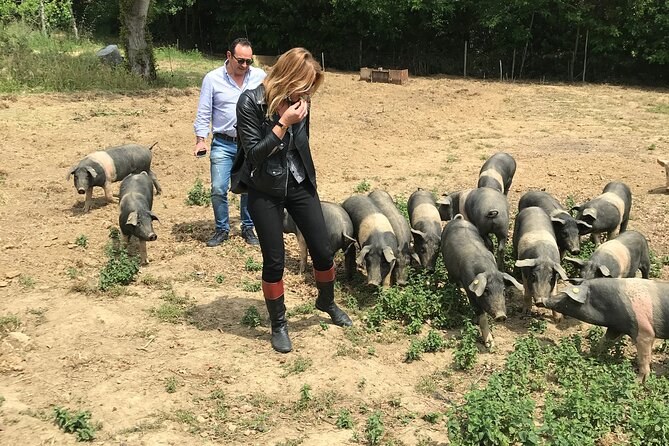
Visit to the Cinta Senese farm in Montepulciano
Ninety minutes on the Cinta Senese farm by the Madonna della Querce church, for your party alone: the pigs, the olive grove, then their cured meat and three cheeses.
From $52 per person
Check Availability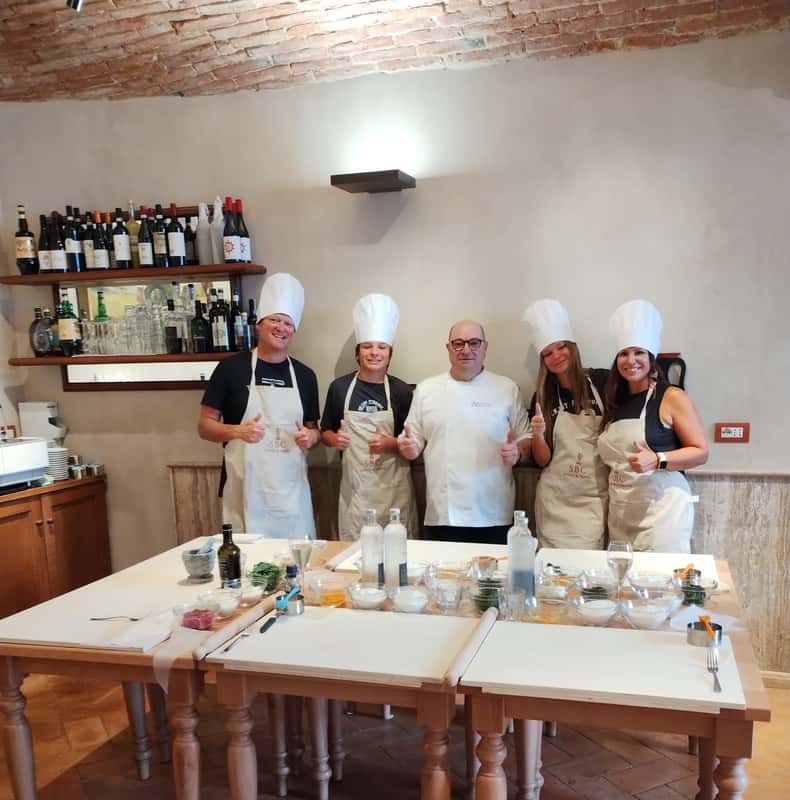
Montepulciano: Tuscan Cooking Class with Fresh Pasta & Wine
Four hours in a kitchen in the centre, making fresh pasta with wine on the bench and lunch at the end of it. You leave able to do it again.
From $91 per person
Check AvailabilityNext: pair the meal with a glass using the wine tasting guide, or compare every tour on Montepulciano Tours.