The Montepulciano Wine Tasting Guide
This guide is for the part of a visit that costs money. The town is free to walk, so there are no Montepulciano ticket prices to find for Montepulciano itself. What you pay for here is the glass. Below is every tasting you can book, what each one pours and feeds you, and how to choose between a cellar under the streets and a grower among the vines.
What does a wine tasting cost in Montepulciano?
Between $35 and $80 a person for the tastings you can book on the hill. That is the whole range, and most of it sits at the bottom. Most fares fall between $35 and $40; the rest climb with what is added, such as a board of cold cuts, a private visit or a professional sommelier.
Every one of those is the operator's own price. None of them is a gate price, because there is no gate. You are paying for somebody's time, their cellar and their wine.
If you add transport, the bill changes shape. A coach day with a tasting and lunch costs $105 to $124 from Rome, Florence or Siena. That is dearer than a tasting, and it includes the drive. Read the Montepulciano wine tours page to see every one of them as a card.
What does $35 pour, and what does $80 pour?
At the bottom of the range, $35 buys you ninety minutes at an organic grower on Via dei Canneti, a kilometre from the temple below the walls. You walk the Sangiovese rows, see the stages of production, and taste their wines. The list names Vino Nobile, a red called Calamus and a sweet Muffato, with taralli, crackers and bruschetta on the side.
At the top, $80 buys an hour and three quarters at the Perbacco wine club on Piazza di San Francesco. A professional sommelier leads it, it opens with an aperitif on the terrace, and it covers Tuscan wines and olive oil. The fare lists water and snacks and names no wine.
So the dearest fare buys teaching, and the cheapest buys the place. If you already know what you like, the grower gives you more wine for less. If you want to learn how to taste, the sommelier session is built for that.
In between sit the cellar hours in the centre, at $37 to $40. They pour the most wines for the money, and you can walk to them.
Which tastings include food, and what kind?
All of them put something on the table. None of them is lunch. Here is what you eat with the glass:
- The cellar hour under the old town: pecorino of several ages, bruschetta with olive oil, and crostini.
- The cellar on Via Ricci: bruschetta with new olive oil.
- Talosa: bread and a plate of local products.
- The resort on Via Umbria: a tagliere, a board of Tuscan cold cuts. It is the most filling of the lot.
- The growers at Via dei Canneti and Sant'Albino: taralli and bruschetta, or local delicacies.
If you want lunch in the fare, a tasting is the wrong product. Book one of the Montepulciano cooking classes or the day from Siena, which adds a full Tuscan lunch with wine.
Cellar or vineyard: which afternoon do you want?
They are two different afternoons, and you should pick on purpose.
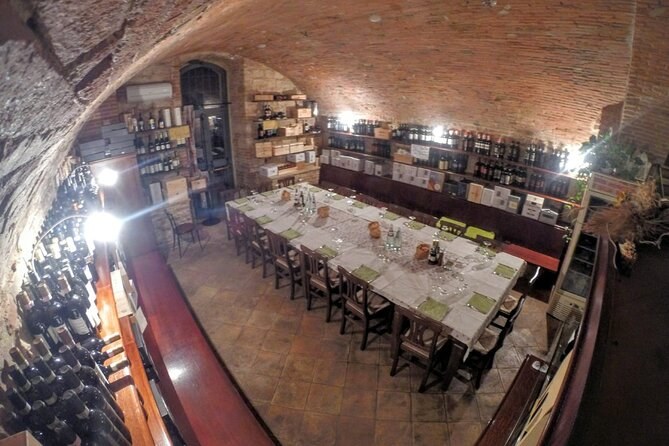
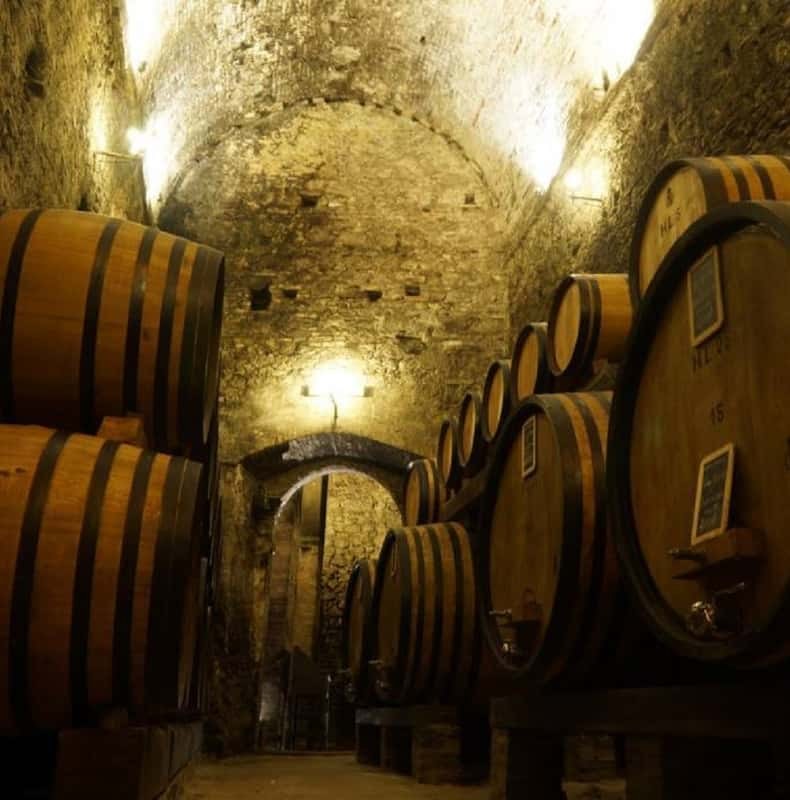
A cellar under the town means stone vaults and oak casks beneath the streets. The town sits on tufa, and the cellars are cut into it. Talosa's vaults date from the 16th century and hold an Etruscan tomb. You walk there from Piazza Grande in a few minutes, so nobody has to drive.
A grower below the town means the vines first and the cellar second. You stand among the rows before you taste. The catch is getting there: Via dei Canneti, Sant'Albino and Via Umbria are outside the walls, and no fare includes the ride.
With a car and a sober driver, go to a grower. On foot, stay in the centre. With two days, do one of each.
How many wines is normal here?
Three to six. The cellar hour under the old town pours five DOC and DOCG wines of Montepulciano. The cellar on Via Ricci pours three to six, from a Supertuscan through Nobile to Nobile Riserva. Talosa pours four: Rosso di Montepulciano, Vino Nobile, a Riserva, and a Nobile called Filai Lunghi or a Supertuscan called Pietrose.
A normal flight runs young to old. You start with Rosso di Montepulciano, the one-year wine from the same grapes, then move to Vino Nobile di Montepulciano, aged at least two years, and end on a Riserva, aged at least three. The wine is Sangiovese, which the growers here call Prugnolo Gentile, at a minimum of 70 per cent.
That is also the answer to the commonest mistake about this wine. It is not made from the Montepulciano grape, which is a different variety grown in Abruzzo. For the rules in full, see the vineyards and the Vino Nobile.
Do you have to book a tasting?
In August, yes. The cellars are small, the busy weekends fill, and several listings carry a "likely to sell out" flag. Over the Bravìo delle Botti weekend at the end of August, book before you travel.
The rest of the year, you can often walk into a cellar in the centre when it is quiet. What a booking buys you then is a fixed time, a guide who talks you through it, and a door that does not open to passers-by.
Book the tasting before you book anything else on the day. Everything else here has no fixed time; the tasting does.
What if a tasting names no wine?
Read the list of what is included, not the title. The Perbacco wine club sells "wine tasting with a professional sommelier" and lists water and snacks. The Vespa day sells a "wine tasting" and lists lunch. Neither names a single wine.
That does not mean you will not taste. It means you cannot check what you are buying. Before you pay, message the operator and ask which wines are poured and how many. If Vino Nobile di Montepulciano is the point of your trip, pick a fare that names it: the cellar hours, Talosa, the grower on Via dei Canneti or the Via Umbria resort.
Who can taste? Age limits at the bench
Nobody under 18 is poured wine. Most tasting listings set 18 as the minimum age to book, and each operator sets its own rules for children who come along.
If you are travelling with children, a cellar hour is the wrong afternoon for them. The Cinta Senese farm visit and the home cooking classes are the ones built for families. The private Montepulciano tours page shows the farm visit, which lists wheelchair access and infant seats.
Will the tasting be in English?
Yes. Every tasting here is sold in English, and several also run in Italian. A handful of listings add Spanish. If you want the tasting in a language other than English, book the option that names it, because a second language is not on every slot.
The wine words stay Italian whatever language you book in: cantina for the cellar, botte for the large cask, Riserva for the longer-aged wine. You will pick them up by the second glass.
Can you buy bottles and ship them home?
Yes, and most people do. The cellars sell what they pour, and several will arrange shipping. Travellers on the Via Ricci cellar hour, at Talosa and at the Perbacco wine club shipped bottles home after their tasting.
Ask two things before you choose how many: what the shipping costs, and whether your country limits what you can import. Neither is in any fare.
If you are flying home with bottles in a case, pack them in the middle of your clothes. A bottle weighs over a kilo; six add up fast.
What is free cancellation worth in August?
A good deal. Every tasting here refunds in full if you cancel at least 24 hours before it starts. That lets you book early for August, when the cellars fill, and still change your mind if the weather or your plans turn.
The one exception on the hill is the Vespa day, which refunds nothing. It sells a tasting and a lunch on a scooter, and its card says so. For any other booking, the rule of thumb is: book early, cancel late if you must.
Every tasting, side by side
Here is each tasting you can book on the hill, cheapest first, from each listing's own figures.
| Where | From | How long | Wines named | Food | Group up to |
|---|---|---|---|---|---|
| The grower on Via dei Canneti | $35 | 90 min | Vino Nobile, Calamus, Muffato | Taralli, crackers, bruschetta | 10 |
| The cellar hour under the old town | $37 | 60 min | Five DOC and DOCG wines | Pecorino, bruschetta, crostini | Not stated |
| The cellar on Via Ricci | $38 | 60 min | Three to six: Supertuscan, Nobile, Riserva | Bruschetta with olive oil | 15 |
| Talosa, on Via Talosa | $40 | 80 min | Four: Rosso, Nobile, Riserva, a fourth | Bread and local products | 15 |
| The wine resort on Via Umbria | $52 | 75 min | Three, one a Vino Nobile | A board of cold cuts | 20 |
| The small grower at Sant'Albino | $58 | 120 min | At least three of their own | Local delicacies | 15 |
| The Perbacco wine club | $80 | 105 min | None named | Snacks and olive oil | 25 |
If you want the most wine for the money, the cellar hours in the centre win. If you want the vines, the growers do. The cellar hour under the old town has its own page: the wine tasting and cellar tour.
Frequently asked questions
What is the cheapest wine tasting in Montepulciano?
What does a wine tasting in Montepulciano cost?
Can I walk into a cellar without booking?
Can I ship wine home?
What if I do not like red wine?
Is Vino Nobile made from the Montepulciano grape?
How is Vino Nobile different from Brunello?
Tastings that fit this guide
Montepulciano: Wine Tasting and Cellar Tour
An hour under the old town with a guide, five DOC and DOCG wines of Montepulciano, and pecorino of different ages with bruschetta and crostini on the side.
From $37 per person
Check Availability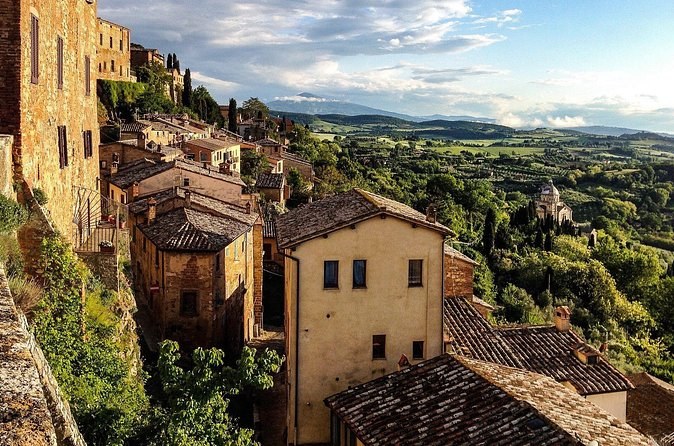
Montepulciano: Winery Tour & Tasting Experience
A historic cellar on Via Talosa, a few steps off Piazza Grande, with a sommelier and a tour of the barrels before the pour. Eighty minutes.
From $40 per person
Check Availability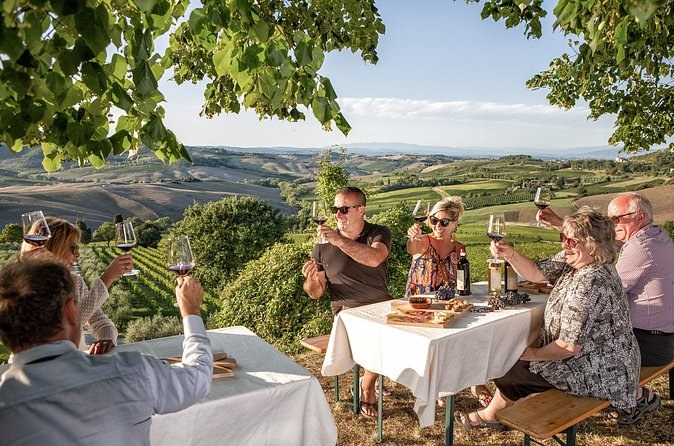
Vino Nobile di Montepulciano winery tour and tasting
A winery a kilometre below the walls, an hour and a half, and Vino Nobile di Montepulciano poured at the place that makes it. The cheapest way to drink the appellation properly.
From $35 per person
Check AvailabilityNext: plan the rest of the day around your tasting with one day in Montepulciano, or compare every tour on Montepulciano Tours.