13 Facts About Montepulciano: the Decrees, the Grape and the Film Set
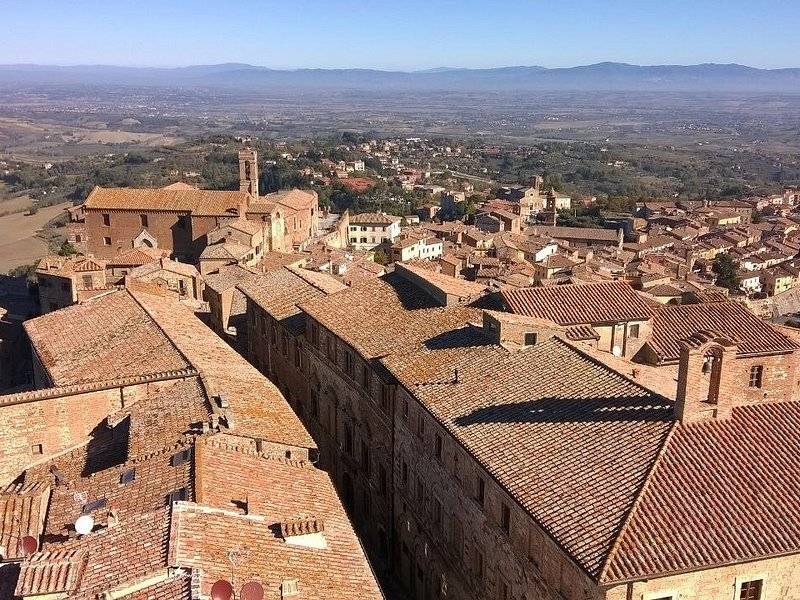
The short answer. Two decrees made the wine, in 1966 and 1980. The grape everybody names is the wrong one. The town is not in the UNESCO valley it looks across at. The cathedral was never finished, the railway station is eight kilometres away, and every August eight teams push 80 kg barrels up the hill you just climbed. Here are thirteen things about Montepulciano that catch visitors out, each with where it came from.
1. There is no ticket to the town, and there never was
No gate, no turnstile, no closing time. You walk in and you walk out. Four things on and below the hill charge admission and the town itself is not one of them, which makes this one of the cheapest days in Tuscany if you keep away from the cellars. The list of what does charge is on the things to do page.
2. The Montepulciano grape has nothing to do with Vino Nobile
This is the one almost everybody gets wrong. Vino Nobile di Montepulciano is made from Sangiovese, which is called Prugnolo Gentile here and must make up at least 70 per cent of the blend. The Montepulciano grape is a different variety altogether, grown hundreds of kilometres east, and it makes Montepulciano d'Abruzzo. The word on both labels is a place name in one case and a grape name in the other, and they are not related.
3. Two decrees, fourteen years apart, made the wine what it is
Vino Nobile di Montepulciano took its DOC by decree of 12 July 1966 and its DOCG by decree of 1 July 1980. Those two dates are worth more than the superlatives you will read elsewhere, because they are checkable. The ageing minimums that came with them — two years for Vino Nobile, three for the Riserva, one for Rosso di Montepulciano — are set out on the vineyards page.
4. Montepulciano is not in the Val d'Orcia
Half the day trips sold here have "Val d'Orcia" in the title, and the town is not in it. The UNESCO property inscribed in 2004 covers five communes: Castiglione d'Orcia, Montalcino, Pienza, Radicofani and San Quirico d'Orcia. Montepulciano sits in the Valdichiana Senese, on its own ridge, looking across the valley at the property rather than standing in it. That is precisely why so many Val d'Orcia itineraries add it — it is the viewpoint.
5. The whole appellation fits inside one comune
Every bottle of Vino Nobile di Montepulciano comes from vineyards inside this single comune. Brunello has the same arrangement one ridge west, and Chianti covers a vast stretch of central Tuscany by comparison. When you taste here you are drinking from the ground you can see from the terrace, which is not true of most Tuscan names.
6. The cathedral's facade was never finished
Santa Maria Assunta stands on Piazza Grande with a front of bare brick. It is not scaffolding, restoration or a bad photograph: the facing was never applied. Four centuries later the square's grandest building is still the plainest thing in it, and the contrast with the palaces either side is the reason the square photographs the way it does.
7. There are Etruscan inscriptions set into a house wall
The base of Palazzo Bucelli, on the way up the Corso, is studded with Etruscan and Latin inscriptions. They were put there by an 18th-century collector who owned the house and treated his own facade as a display case. You walk past them at knee height, with no glass and no label, and most people never look down.
8. A figure of Pulcinella strikes the hours
Opposite Sant'Agostino, the Torre dell'Orologio carries a figure of Pulcinella — the commedia dell'arte character — who strikes the bell. He is several metres above a street everyone is climbing with their eyes down. Stand still for one hour mark and you will see something most day visitors miss entirely.
9. The best building in Montepulciano is outside Montepulciano
The Tempio di San Biagio stands alone on a lawn below the walls, at the end of an avenue of cypresses, with nothing built against it. Antonio da Sangallo il Vecchio began it in 1518 as a Greek cross in travertine. It costs €5, the audioguide is free in five languages, and it is about fifteen minutes down from the walls — and rather longer back up.
10. Every August, eight teams push barrels up that hill
The Bravio delle Botti is run on the last Sunday in August. Eight contrade enter two runners each, and they push barrels of about 80 kilograms roughly 1.6 kilometres uphill to Piazza Grande — the same climb you did with a bottle of water and no barrel. The modern race dates from 1974, and the prize is the Panno, a painted cloth. The organisers' own site carries the calendar; we do not print a date because it moves. The timing page explains what the week does to the town.
11. This town played Volterra in a vampire film
New Moon, the second Twilight film, used Montepulciano as a stand-in for Volterra, and the listings here still sell it in their own copy. Reviewers turn up not knowing and leave pleased. The locations are on and around Piazza Grande and you can walk them all in ten minutes without a guide.
12. The railway station called Montepulciano is nowhere near it
Montepulciano Stazione is a frazione down on the plain, on the Siena–Chiusi line, about 7.8 kilometres from Piazza Grande in a straight line and further by road. Arriving there and expecting the town is the single commonest planning mistake made here. Chiusi, 16 kilometres away, is the nearest main-line station. The car-free guide works through the options, and the map page has the distances.
13. A small civic museum may hold a Caravaggio
The Museo Civico Pinacoteca Crociani, in the 14th-century Palazzo Neri Orselli on Via Ricci, is built on a bequest of 188 paintings made in 1861 by a canon of the cathedral. Among them are a Sodoma, a panel by Margaritone d'Arezzo, a Nativity given to Benvenuto di Giovanni — and a portrait of a man recently attributed to Caravaggio. Entry is €6, or €8 with the tower.
The facts side by side
| The claim you will hear | What is actually true |
|---|---|
| You need a ticket for Montepulciano | There is no gate and no ticket; four doors charge |
| Vino Nobile is made from Montepulciano | It is Sangiovese, called Prugnolo Gentile here, at least 70 per cent |
| Montepulciano is in the Val d'Orcia | The UNESCO property is five communes and this is not one of them |
| The cathedral is under restoration | The facade was never faced; that is the finished state |
| The train goes to Montepulciano | It goes to a frazione on the plain, about 7.8 km from the square |
| The barrel race is a tourist event | Eight contrade, two runners each, 80 kg, 1.6 km uphill, since 1974 |
Where the facts come from: the comune and the temple for the admission figures, both read on 20 September 2026; the appellation's own decrees and ageing rules for the wine; the UNESCO inscription's own list of communes; the organisers' site for the Bravio; and the tour listings themselves for the film. Anything without an official source of its own is named on the disclosure page rather than guessed at.
Three ways to meet the town that is not about wine
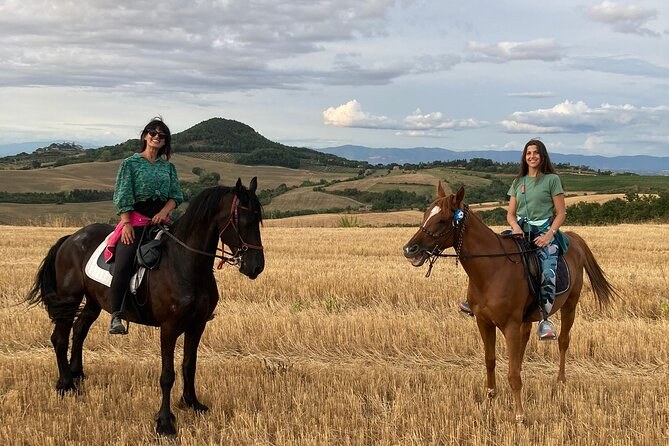
Horseback riding through the vineyards in Montepulciano Tuscany
An hour and a half in the saddle through the vineyards, out at Localita Bertille. Bottled water and coffee rather than a tasting, and the best view of the vines that does not involve pedalling.
From $93 per person
Check Availability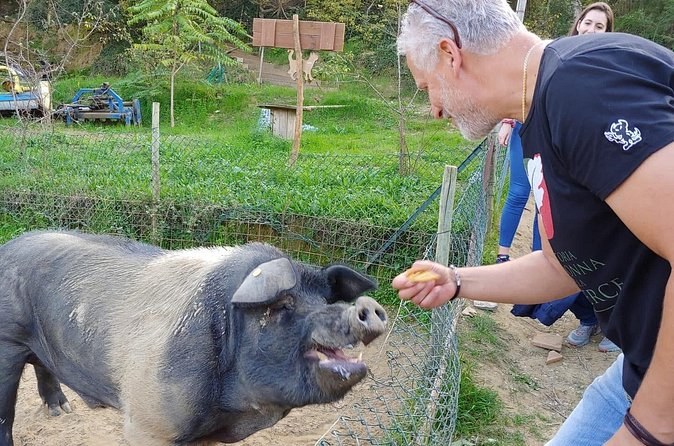
Montepulciano: Cinta Senese Farm Tour, Food Tasting & wine
Two hours at the Cinta Senese farm on Via Madonna della Querce: the pigs, the curing room, then lunch and wine from what comes out of it.
From $67 per person
Check Availability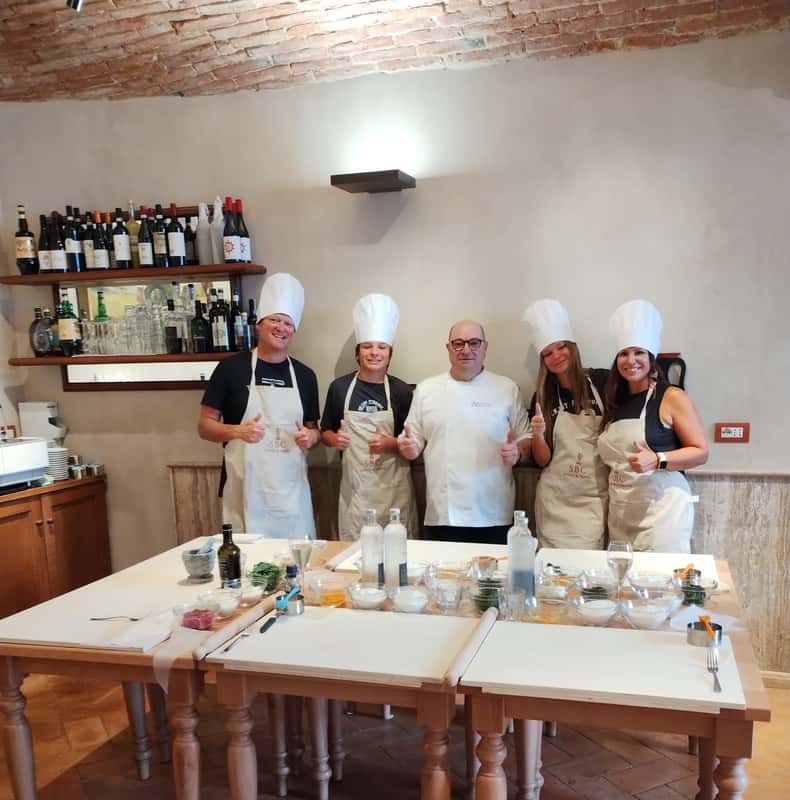
Montepulciano: Tuscan Cooking Class with Fresh Pasta & Wine
Four hours in a kitchen in the centre, making fresh pasta with wine on the bench and lunch at the end of it. You leave able to do it again.
From $91 per person
Check AvailabilityNext: Work out how you are getting here in the guide to arriving without a car. Every fare sits side by side on Montepulciano Tours.