How to Visit Montepulciano: What Charges, What Does Not, and What a Day Costs
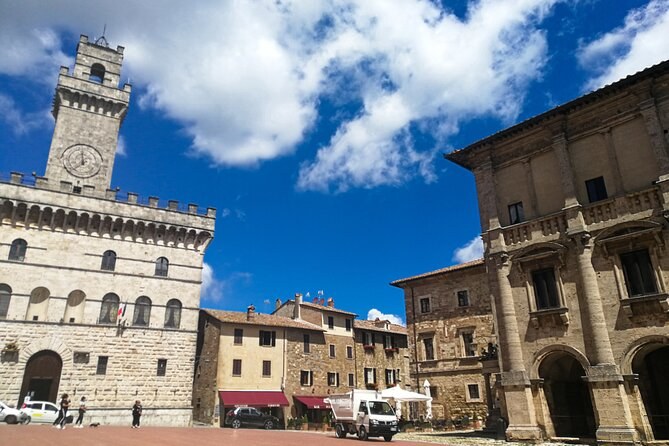
The short answer. Nobody sells a ticket to Montepulciano. You walk in through the gate and you walk out again, and the town costs nothing. Four things on and below the hill charge: the civic tower and its terrace at €5, the Museo Civico at €6, both together at €8, and the temple below the walls at €5. What you actually spend your money on here is the pour, and tastings start at $35 a person.
What you are paying for in Montepulciano, and what you are not
Most hill towns in this part of Tuscany hand you the same surprise twice: the walk is free and the wine is not. Montepulciano is the clearest case of it. There is no gate, no turnstile and no closing time for the town itself, so the first hour of your day costs nothing at all. Then you stand in front of a cellar door and the real pricing begins.
That is why searching for Montepulciano tickets turns up so little that makes sense. There are none to buy for the town. What there is, is a short list of doors that charge and a long list of glasses that do, and this guide sets both out with the dates they were checked. For the wider picture of the hill itself, the visitor guide covers the same ground with the access notes attached.
The four things that charge, and what they cost
Read the middle column before the left one. Every figure below is the comune's or the temple's own, and both are reissued each spring, so the week before you travel is the time to check the current one rather than the morning you arrive.
| What | Full | Reduced | When |
|---|---|---|---|
| Walking the town | Free | Free | No gate, no closing time |
| Torre del Palazzo Comunale and the terrace | €5 | €2.50, free under 10 | Daily 10:00–18:00, last entry 17:45 |
| Museo Civico Pinacoteca Crociani | €6 | €4 | 1–30 April 10:00–18:00; 1 May–31 October 10:00–19:00 |
| Tower and museum together | €8 | €6 | Whichever door you reach first |
| Tempio di San Biagio | €5 | Free under 6; free audioguide in five languages | Six seasonal bands; 1 April–30 September daily 10:00–13:30 and 14:00–18:30 |
The tower and museum figures are the Comune di Montepulciano's season notice published on 1 April 2025, which was still the most recent one published when we checked on 20 September 2026. The temple's are its own site, read the same day. The tower runs into early November, weather permitting, and the exact end date moves; the comune is the source to trust on it. All four doors, with what is behind each one, are on the things to do page.
Getting here, and the station that is not here
There is a railway station called Montepulciano and it is not in Montepulciano. It stands down on the plain in the frazione of Montepulciano Stazione, on the Siena–Chiusi line, about 7.8 km from Piazza Grande as the crow flies and further by road. From there you take a bus or a taxi to the foot of the hill, and then you climb.
Most people therefore arrive one of three ways. They drive and park below the walls. They come on a coach day from Rome, Florence or Siena, which handles the whole problem for them. Or they base themselves one town over and drive in: Pienza is the next ridge, and Montalcino is about an hour away. The trade-offs, with the straight-line distances from the square, are worked out in full on the parking and map page, and the car-free guide takes the question apart properly.
Where to leave the car, and the climb that follows
The old town is a no-car zone, and two separate operators on this hill name the same answer in their own meeting-point text: Parking San Donato or Parking 8. Both sit below the walls, because everything does. The walk up is the part nobody warns you about — the Corso climbs the entire way from the gate to the square, roughly twenty-five minutes without stops, and it is steeper than it looks in photographs.
- Parking 8: the one the bike shop on Via Ricci names as its nearest free parking.
- Parking San Donato: named alongside it by the cellar on Via Ricci 13.
- Parcheggio 7 and 6: both listed by the private walking tour as close to the top.
- Anywhere inside the walls: not an option unless you are staying there.
Plan the climb into the day rather than around it. If your knees have opinions, book a meeting point at the top — several tastings meet on or just off Piazza Grande — and take the walk downhill instead.
How long to allow
- Two hours: the Corso from the gate to the square, and a coffee. No tower.
- Half a day: the same walk, the tower and terrace, and one tasting.
- A full day: add the Museo Civico and the walk down to the temple below the walls, which takes about fifteen minutes down and rather longer back.
- Two days: a cellar hour on one, and a vineyard or a ride out on the other.
- A coach day: between no time at all and about three hours on the hill, depending entirely on which day you book.
The third item is the one people underestimate. The temple stands alone at the end of an avenue of cypresses, outside the town, and the return leg is uphill all the way.
What a first day actually costs
| Your day | What it costs | What you get |
|---|---|---|
| The town on your own | Nothing | The gate, the Corso, the square, the views |
| Town plus the tower | €5 | The terrace and the roofs of the Valdichiana |
| Tower, museum and temple | €13 | Every door on the hill that charges |
| One tasting | $35 to $80 a person | A cellar or a winery, with the wine explained |
| A cooking class | $76 to $206 a person | Pici or pasta at the bench, and lunch |
| Out among the vines | $93 to $303 a person | A bike, a horse or a Vespa, and the country between cellars |
| A coach day from another city | $105 to $124 a person | Transport, a guide and usually lunch |
The euro figures are the sights' own. The fares are in US dollars, because that is the currency the listings quote, and each one states what the fare covers. The gap between the two columns is the whole point of the town: you can have a full day here for €13 and a picnic, or you can spend the afternoon underground.
Booking the pour, and when it matters
Tastings on this hill are small. A cellar hour takes a handful of people, a private tasting takes your party and nobody else, and the cooking classes run at a single bench. That is why walking up and asking rarely works in the season, and why the fare is almost always cheaper than what an afternoon of buying glasses one at a time comes to.
If you want the shortest possible version, the cellar hour runs sixty minutes and pours five DOC and DOCG wines. If you want the vines rather than the vaults, the winery a kilometre below the walls costs $35 and pours the appellation where it is made. Both need booking rather than turning up, and both come with free cancellation up to 24 hours ahead.
What to know before you climb
Take a layer even in August: the cellars sit at cellar temperature all year and you will be in one. Wear shoes you can climb in. Eat before a tasting rather than after, because the food that comes with a pour is pecorino and bruschetta rather than a meal. And read the meeting address on your confirmation the night before — several operators here run more than one door, and a few of the addresses are outside the walls entirely.
One last thing about the wine, because it catches almost everybody. Vino Nobile di Montepulciano is made from Sangiovese, called Prugnolo Gentile here. The Montepulciano grape is a completely different variety that makes Montepulciano d'Abruzzo, hundreds of kilometres east. The name on the bottle is a place, not a grape, and the vineyards page sets out the rules behind it.
Three ways to start a first day here
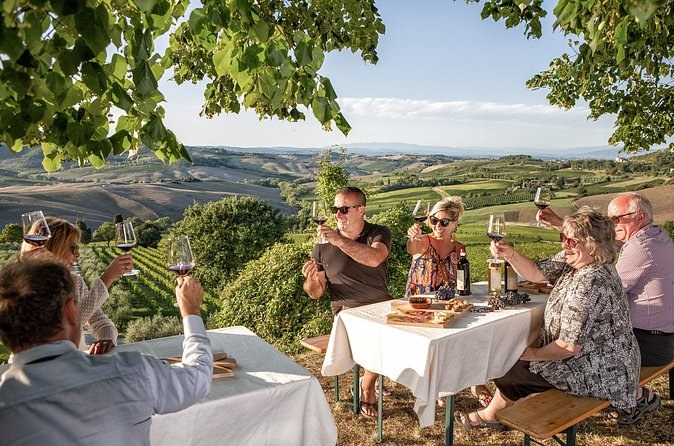
Vino Nobile di Montepulciano winery tour and tasting
A winery a kilometre below the walls, an hour and a half, and Vino Nobile di Montepulciano poured at the place that makes it. The cheapest way to drink the appellation properly.
From $35 per person
Check Availability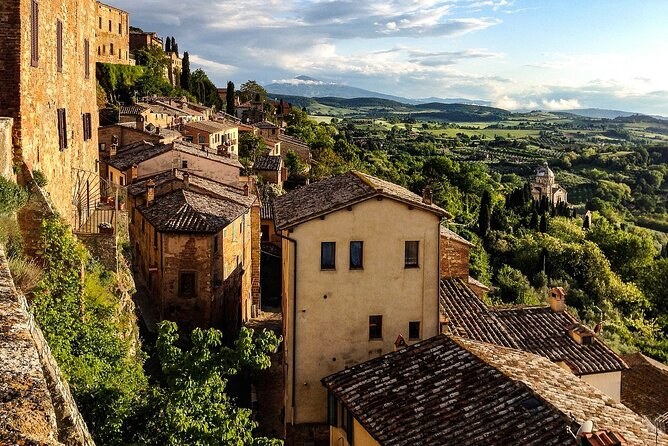
Tasting Tour in One of The Most Beautiful Cellars in the World
An hour in a cellar off Via Ricci, in the centre and inside the walls. Nobile poured underground, with the no-car zone and the car parks named in the operator's own meeting text.
From $38 per person
Check Availability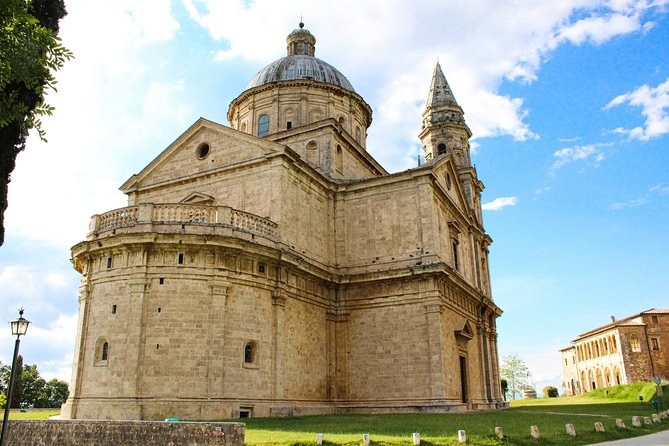
Private Guided Tour of Montepulciano with wine tasting
Two hours on foot with a private guide, meeting in front of the city hall on Piazza Grande. Your party only, and a tasting at the end of the walk.
From $154 per person
Check AvailabilityNext: Walk the hill door by door in the guide to every cellar, piazza and palazzo. Every fare sits side by side on Montepulciano Tours.