Inside Montepulciano: Every Cellar, Piazza and Palazzo on the Hill
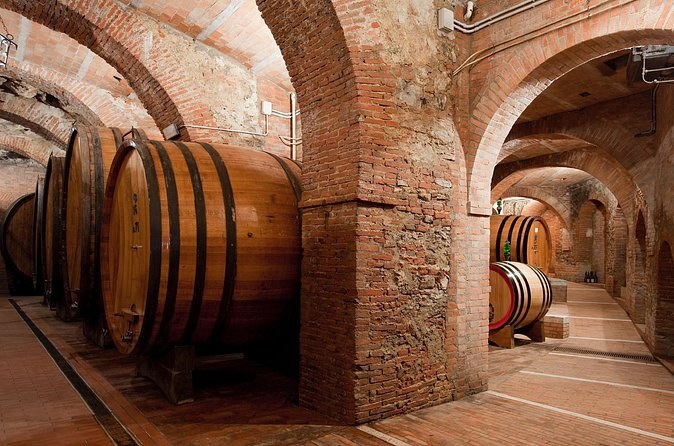
The short answer. Montepulciano is one street and one square. The Corso climbs from Porta al Prato at the bottom to Piazza Grande at the top in about twenty-five minutes, and almost everything worth stopping for is on it or cut underneath it. Give the walk up two hours with stops, add the tower, and keep an hour back for the temple below the walls.
How the town is laid out
You do not need a map here so much as a direction: up. The town runs along the spine of a ridge, walled, with a gate at the low end and the main square at the high one. The street between them changes its name as it goes, which confuses people, but it is one street and you cannot lose it.
What makes the walk worth doing slowly is that the palace fronts and the cellar doors are the same buildings. The great families built on the Corso in the 15th and 16th centuries, and the wine estates are underneath, cut into the tufa the hill is made of. You pass a Renaissance facade at street level and a working cellar two floors below it without noticing the connection. Montepulciano Tours lists the doors you can actually get through.
Porta al Prato, and the first ten minutes
Start at the bottom. Porta al Prato is the gate most people come through, and the bus stop nearest it. From here the street begins to climb immediately and does not stop. This is the stretch where you decide what kind of day you are having: fast, and you arrive at the top out of breath with nothing seen, or slow, with three or four stops behind you.
Two things on this lower section are worth the pause. Palazzo Avignonesi, Vignola's, sits on your right as the street steepens. A little further up, Palazzo Bucelli is the one to look down at rather than up: its base is studded with Etruscan and Latin inscriptions, set into the wall by an 18th-century collector who owned the house. It is the only place in town where the Etruscan layer is at eye level.
The Colonna del Marzocco and the clock tower
Halfway up, the lion column marks the point where almost everyone turns round to look back down the street. Take the photograph there; it is the best view of the Corso you will get, and it is free.
Opposite Sant'Agostino stands the Torre dell'Orologio, and on top of it a figure of Pulcinella strikes the hours. People walk under it for years without looking up. Wait for the hour if you are close to it — it takes a minute and it is the sort of detail this town is full of.
Piazza Grande, and the five buildings that box it in
The square at the top is the only flat ground in the town, and five buildings enclose it. Once you know which is which it stops being a photograph and starts being a place.
- Palazzo Comunale. The city hall, and the one you climb. Begun at the end of the 14th century, the facade finished around 1440 and attributed to Michelozzo: rusticated stone below, travertine above, a projecting walkway with merlons on top and the civic tower rising out of the middle. The tower and terrace are €5, or €8 with the museum.
- The Duomo. Santa Maria Assunta, whose front was never faced. It is still bare brick, which is why it looks unfinished in every photograph of the square — and it has looked like that for four centuries.
- Palazzo Nobili-Tarugi. Vignola's, with an arcade at street level. The well beside it, with its lions and griffins, is Antonio da Sangallo il Vecchio's, from his years working in the town.
- Palazzo Contucci. Sangallo il Vecchio again, and not a museum: the wine estate underneath it is one of the working cellar doors on the square.
- Palazzo del Capitano. The oldest face here and the plainest, a Gothic front that survived the Renaissance rebuilding going on around it.
Allow forty minutes on the square without the tower, and an hour with it. The terrace is the only place you can see both the roofs and the valley at once.
The cellars cut under the street
This is the part of the town you cannot see from the street, and the reason to book something rather than wander. The cellars are dug into sandy tufa, and fossils have been found in it — the ridge was under water long before anyone planted a vine on it. The temperature down there barely moves all year, which is why they were dug in the first place.
What you find at the bottom of the stairs is rows of big Slavonian oak barrels, where Vino Nobile di Montepulciano is aged, often standing next to barrels of French oak doing a different job to the same wine. A guided hour is how the difference stops being a label. The cellar hour in the centre runs sixty minutes and pours five DOC and DOCG wines; the historic cellar on Via Talosa is eighty minutes with a sommelier. The vineyards page has the ageing rules that make sense of both.
The Tempio di San Biagio, outside the walls
The single best building here is not in the town at all. The Tempio di San Biagio stands alone on a lawn at the end of an avenue of cypresses, below the walls, with nothing built up against it. Antonio da Sangallo il Vecchio began it in 1518: a Greek cross in honey-coloured travertine, and the one structure in Montepulciano you can walk all the way round.
It is about fifteen minutes down from the walls and noticeably longer back up, which the photographs never tell you. Admission is €5 and the audioguide is free in five languages. If the climb back is the problem, the e-bike day rides down past it and a coach day stops there for photographs on the way through.
Things most visitors walk straight past
- The inscriptions at knee height on Palazzo Bucelli — Etruscan, and set into a house wall rather than a museum case.
- The bare brick of the Duomo, which is not scaffolding or restoration. It was simply never finished.
- Pulcinella on the clock tower, who strikes the hours over a street nobody is looking up in.
- The Caravaggio attribution in the Museo Civico — a portrait of a man, in a collection built on a bequest of 188 paintings made in 1861.
- The Fortezza's edge, Sangallo il Vecchio's fortress at the top, where the walls look straight down over the vineyards. Late afternoon is the light.
The order to walk it in
| Stop | Allow | Why here |
|---|---|---|
| Porta al Prato | 5 minutes | The gate, the bus stop and the bottom of the climb |
| Palazzo Avignonesi and Palazzo Bucelli | 15 minutes | Vignola at street level, Etruscan inscriptions at knee level |
| Colonna del Marzocco | 10 minutes | The best look back down the Corso |
| Sant'Agostino and the clock tower | 10 minutes | Pulcinella strikes the hour |
| Piazza Grande | 40 minutes | Five buildings, one flat square |
| The tower and terrace | 20 minutes | €5, and the only view of roofs and valley together |
| A cellar | 1 to 1 h 20 | The part of the town that is under it |
| Tempio di San Biagio | 1 hour | Fifteen minutes down, longer back, €5 to go in |
Walk up in the morning and down in the afternoon, not the other way round. The coach days arrive in the middle of the day and leave by late afternoon, most of them having come by way of Pienza and some by way of Montalcino, so the square empties out around then — the timing page has the pattern. And if you want somebody to explain the fronts as you pass them, the private guided walk from Piazza Grande runs two hours for $154 and finishes on a tasting.
Three doors on and just off the Corso
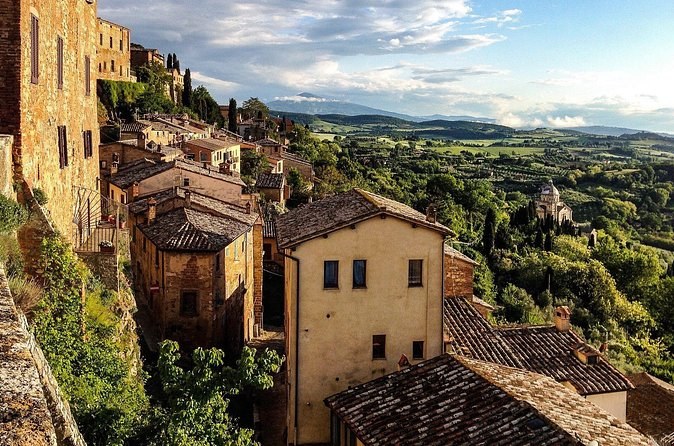
Montepulciano: Winery Tour & Tasting Experience
A historic cellar on Via Talosa, a few steps off Piazza Grande, with a sommelier and a tour of the barrels before the pour. Eighty minutes.
From $40 per person
Check Availability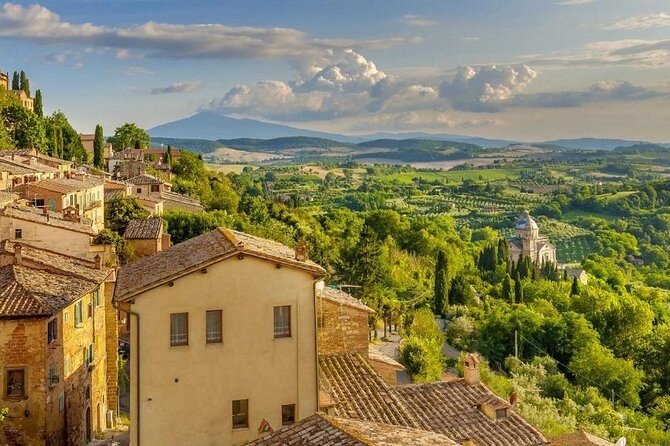
Tuscan Wine Tasting with Professional Sommelier in Montepulciano
An hour and three quarters in a wine club on Piazza di San Francesco, led by a professional sommelier. No wine is named in advance, so come for the sommelier's choice rather than a set flight.
From $80 per person
Check Availability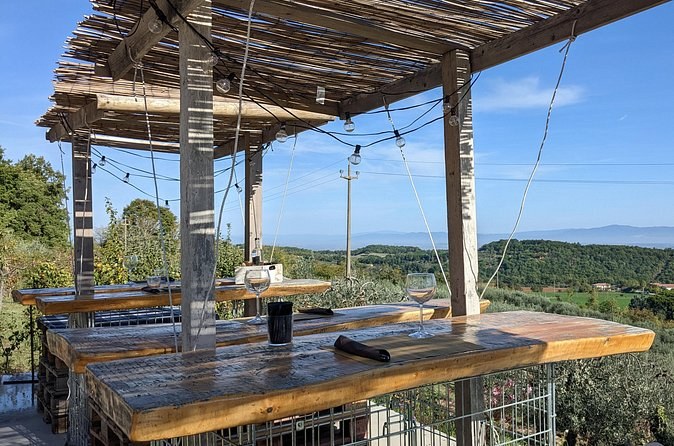
Montepulciano - Heroic Wine Tasting
Two private hours at a small grower down at Sant'Albino, below the hill. Local wines, your party only, and no coach anywhere near it.
From $58 per person
Check AvailabilityNext: Find out what the town gets wrong about its own wine in thirteen facts with their sources. Every fare sits side by side on Montepulciano Tours.