Montepulciano vs Montalcino: Which Tuscan Wine Day Is Yours?
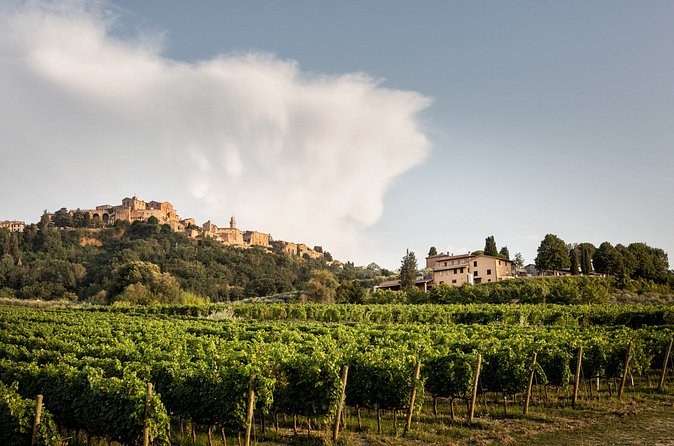
The short answer. Same grape, two sets of rules, two different days. Montepulciano gives you Vino Nobile, a walled town you climb on one street, and cellars cut under it. Montalcino, 24 kilometres west, gives you Brunello and a longer minimum in the barrel. If you only have one day, pick the town whose wine you want in the glass. If you have a day trip booked, check which of the two it actually pours — several pour both, and one pours only Brunello.
The tension nobody names
Travellers arrive in southern Tuscany having read both names and assuming they are interchangeable stops on the same loop. They are not. They are two appellations with different rules, on two ridges with a valley between them, and a day trip that puts both in the title usually spends most of its time at one.
The decision is easier than it looks once you know what separates them, and the wine is the honest place to start rather than the scenery. If you are already comparing a Montepulciano booking, read the tasting line on each card before the itinerary — that line is the difference.
Side by side
| Montepulciano | Montalcino | |
|---|---|---|
| The wine | Vino Nobile di Montepulciano | Brunello di Montalcino |
| The grape | Sangiovese, called Prugnolo Gentile, at least 70 per cent | Sangiovese |
| Minimum ageing | Two years, three for the Riserva | Longer than Vino Nobile |
| Where it is grown | Entirely inside this one comune | The comune of Montalcino, the next ridge west |
| The everyday bottle | Rosso di Montepulciano, one year | Rosso di Montalcino |
| UNESCO Val d'Orcia | Outside it, looking across at it | One of the five communes inside it |
| From Piazza Grande | — | 24 km in a straight line |
| Tastings here | $35 to $80 a person | Sold on the day trips that stop there |
The ageing row is the one to sit with. Both wines are Sangiovese, so what makes them taste different is mostly time and ground rather than variety. Vino Nobile must spend two years ageing, at least one of them in wood, and three for a Riserva. Brunello's minimum is longer still, which is part of why it costs more and why it is the more famous bottle abroad. The rules behind the local one, with their decrees and dates, are on the vineyards page.
The case for Montepulciano
This is the walkable one. The town is a single street climbing from a gate to a square, and the cellars are underneath it, so you can taste three times in an afternoon without getting into a vehicle. That is unusual in wine country and it is the whole argument.
It also costs less to sample. A cellar hour here starts at $35 a person and the hour under the old town pours five DOC and DOCG wines for $37. The town is free to walk, the tower is €5 and the temple below the walls is another €5, so a full day of sightseeing costs less than one bottle of either appellation. The things to do page prices every door.
The case for Montalcino
Brunello is the bigger name, and for a certain kind of traveller that settles it. If you have been buying it at home for years, tasting it where it is made is the day you came for, and no amount of arguing about walkability will change that.
Practically, it is also a different shape of day. Montalcino is 24 kilometres away, which in this landscape means you drive or you book something that drives you. That makes it a day-trip destination from here rather than an afternoon, and it means the tasting usually happens at an estate rather than under a street. If you do not have a car, the car-free guide explains why the coach days are the practical answer.
Doing both in one day
It is possible, and the day trips are how. Several of the coach days here take in both appellations, and a couple add Pienza as well, which means three hill towns and two tastings between breakfast and a late dinner.
- From Florence, three towns: the day that takes in Montalcino, Pienza and Montepulciano runs twelve hours with two tastings.
- From Florence, the valley loop: the Val d'Orcia day pours Vino Nobile and Brunello both, with Pienza's pecorino on the board.
- From Siena: the ten-hour day names Brunello, Nobile di Montepulciano and regional wines, and is the shortest of the coach days.
- From Rome: the eleven-hour day gives the most time on this hill, and its named tasting is Brunello rather than the local wine.
The trade is always the same: doing both halves the time you get in either. Two towns and two tastings in one day means roughly two hours on each hill, which is enough for a square and a glass and not much else.
What the two towns feel like on foot
Wine aside, these are not the same kind of afternoon. Montepulciano is a climb: one street, walled, rising the whole way from Porta al Prato to Piazza Grande in about twenty-five minutes of continuous ascent, with palace fronts on both sides and cellar doors cut into them. You arrive at the top having earned the square, and everything you might want to see is on the line you have just walked. That layout is why a car-free day works here at all.
Montalcino is a drive from here rather than a walk, and once you are there the tastings are generally at estates rather than under a street. That makes it the better half of a day than the whole of one, unless you are staying nearby. If you want the difference in practical terms, look at how the coach days treat the two: Montepulciano gets a guided walk and free time, and Montalcino usually gets an estate and a glass. The walk up this hill is set out stop by stop.
What to do if you only have one day
Choose on the glass, not the guidebook. If Vino Nobile di Montepulciano is the bottle you want to understand, stay here, book a cellar and walk the Corso: this town gives more per hour than any itinerary that keeps moving. If Brunello is the reason you came to Tuscany, take a day that goes there and accept the driving.
And if you genuinely cannot decide, stay on this hill and book a day that pours both. It is the only version where you taste the two side by side with somebody explaining the difference, which is worth more than standing in a second square.
Which one, by traveller
| If you are | Choose | Because |
|---|---|---|
| Without a car | Montepulciano | Cellars and meeting points inside the walls; no driving needed |
| A Brunello drinker | Montalcino, on a day trip | The wine you came for, tasted where it is made |
| Here for one day only | Montepulciano | One street, one square, three cellars, no transfers |
| Travelling with a driver | Both | Two hours each, and the two wines in one afternoon |
| Walking with children or tired knees | Montepulciano | Everything is on one street, and the town costs nothing |
| Chasing the Val d'Orcia photographs | Montalcino side | The inscribed property is over there; this ridge is the viewpoint |
Whichever way you go, book the tasting before the transport. Cellars here are small, the fares include free cancellation up to 24 hours ahead on almost everything, and the one listing that is non-refundable says so on its own card. The questions page covers the rest.
Three days that pour both hills
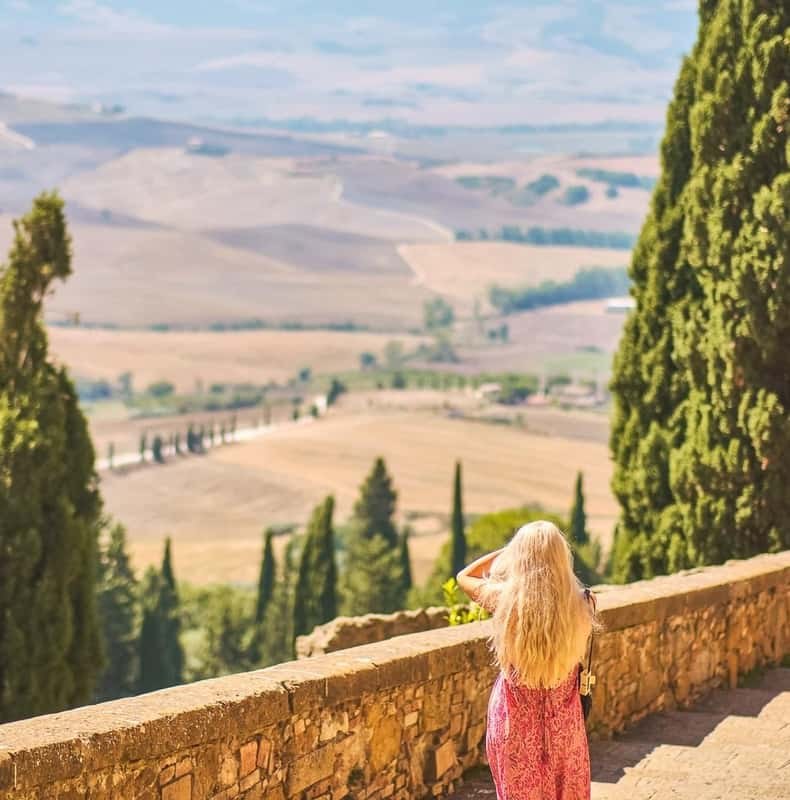
Florence: Montalcino, Pienza, Montepulciano & Wine Tastings
Twelve hours from Florence taking in Montalcino and Pienza as well as Montepulciano, with two tastings and about an hour and three quarters on this hill.
From $105 per person
Check Availability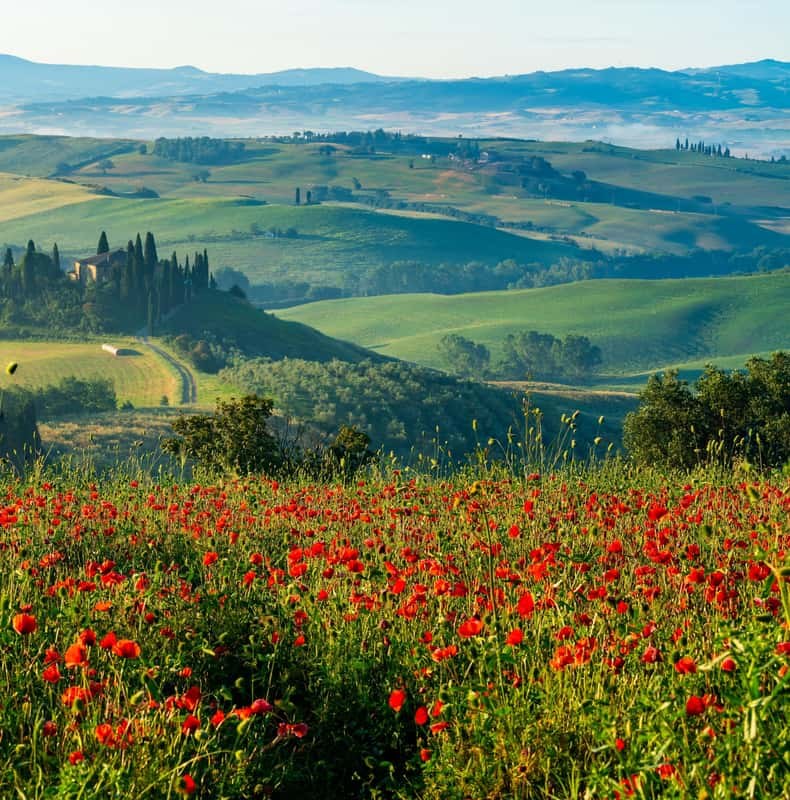
Rome: Tuscany & Montepulciano Day Trip with Lunch & Wines
Eleven hours from Rome, nearly three of them here, with a photo stop below the walls, a three-course farm lunch and a guided tasting naming Brunello di Montalcino.
From $113 per person
Check Availability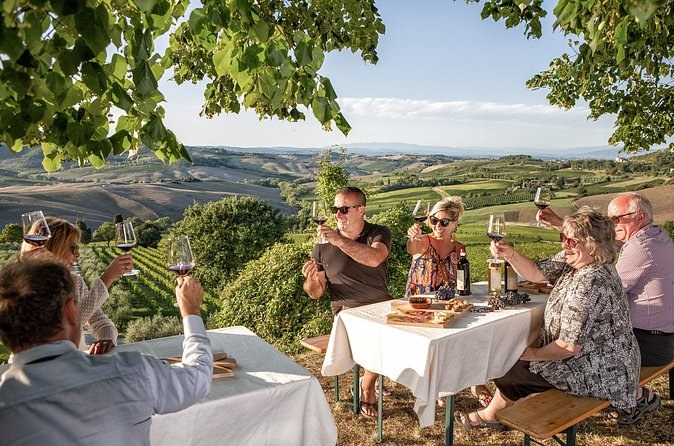
Vino Nobile di Montepulciano winery tour and tasting
A winery a kilometre below the walls, an hour and a half, and Vino Nobile di Montepulciano poured at the place that makes it. The cheapest way to drink the appellation properly.
From $35 per person
Check AvailabilityNext: Price the whole first day in the practical guide to visiting. Every fare sits side by side on Montepulciano Tours.